City of Johannesburg Human Settlements Research Publication 2025/26
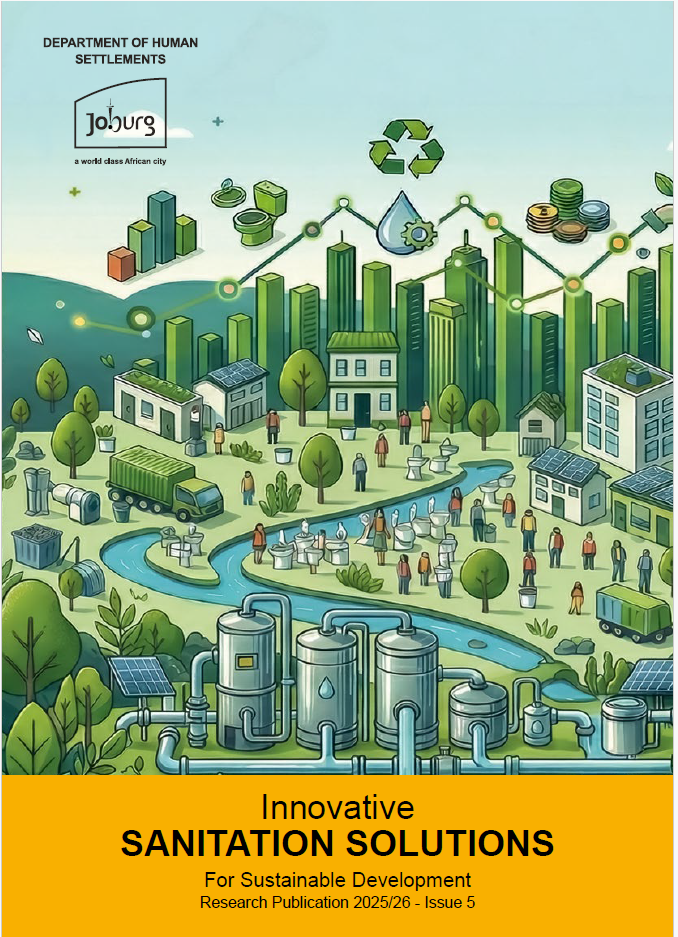
Innovative Sanitation Solutions for Sustainable Development
01 June 2026
Londeka Thanjekwayo, Mathung Sekonyela, Thabo Molaba
English
Research report
City of Johannesburg Department of Human Settlements
Africa
South Africa has one of the most progressive legislative and policy frameworks for water and sanitation services globally. This framework includes the constitutional right to access sufficient water and sanitation, as well as the national Free Basic Water policy (PDF, 4.21MB), which seeks to ensure a minimum level of service for all citizens (COHRE, 2008). These commitments reflect the country’s strong policy intent to address historical inequalities and promote equitable access to basic services. Sanitation is a cornerstone of public health, involving access to safe drinking water, effective sewage treatment, and environmental cleanliness (Abrahams & Everatt, 2019). It mitigates diseases such as roundworm infections, ensures hygienic conditions through waste and wastewater management, and addresses global health challenges. Despite sanitation initiatives, millions worldwide lack access to basic sanitation services (Hewitt et al., 2020).
Regardless of progressive policy framework, sanitation remains a persistent and unresolved challenge, particularly in urban informal settlements. Global assessments continue to highlight the scale of the problem. A joint report by the World Health Organisation (WHO) and UNICEF indicates that while 64% of the world’s population relies on improved sanitation facilities, approximately 15% still practice open defecation, underscoring the magnitude of sanitation deficits worldwide (WHO and UNICEF, 2013).
In South Africa, access to safe and hygienic sanitation is a constitutional right, enshrined in Section 24 of the Constitution (Act 108 of 1996). This right contributes to public health, human dignity, and environmental sustainability.
Abstract based directly on original source.


Comments