
Learning from Africa's urban climate innovations
A new framework and comparative analysis to foster transformative climate action
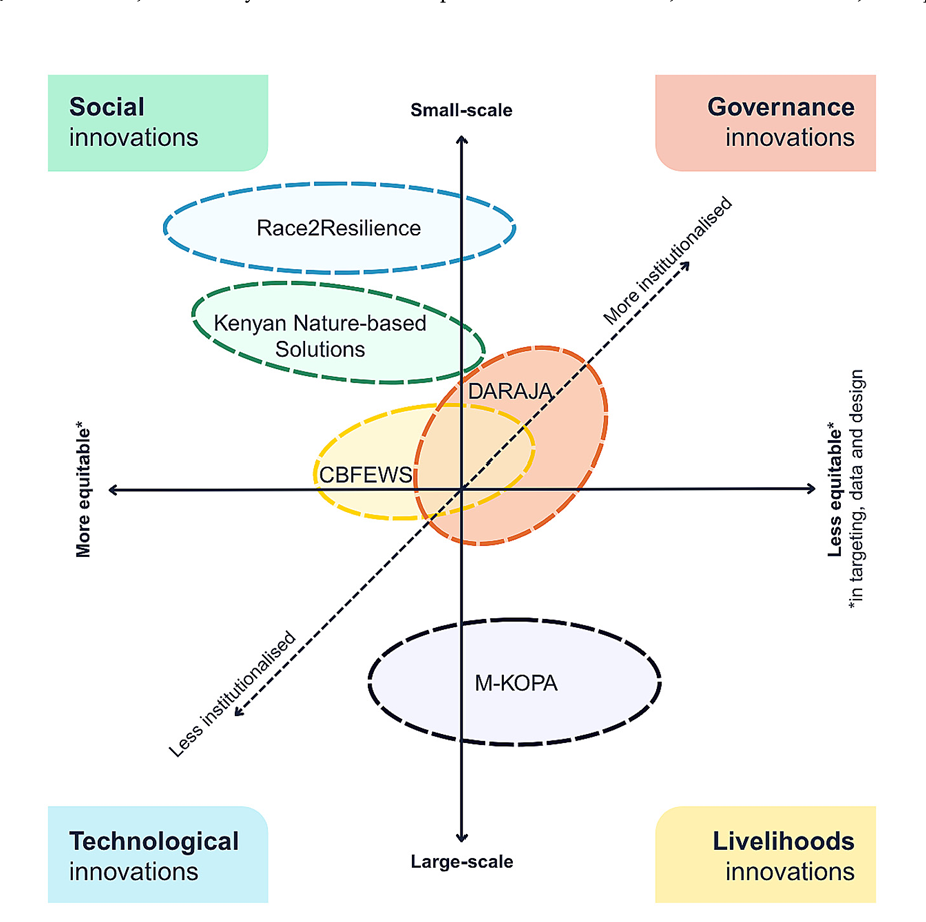
African cities face intensifying climate risks shaped by rapid urbanisation, informality, unequal access to services, and exclusionary governance, yet these urban centres are also important sites of experimentation and innovation. This paper examines how climate innovations in African cities have emerged across technological, social, governance, and livelihood domains, and it assesses their potential to support equitable and transformative urban climate action. The authors seek to fill several gaps in existing innovation scholarship, which is often biased towards isolated sectors and Global North contexts, by offering a cross-sectoral and justice-oriented analysis of African urban examples. The paper develops an analytical framework that considers multiple dimensions of climate innovation: domains of action; types of innovation; and levels of equity, institutionali sation, and scale. This framework is applied to case studies from East and Southern Africa (Kampala, Durban, Nairobi, Embu, and Dar es Salaam), including pay-as-you-go solar energy, community-based flood early warning systems, nature-based solutions, and psychosocial resil ience initiatives.
Rather than consisting of technological change alone, climate innovations in African cities often involve hybrid combinations of social, technical, governance, and livelihood innovations that respond simultaneously to climate risks and wider development challenges. Equitable in novations will require cross-cutting strategies including social mobilisation and enabling gover nance frameworks, appropriate technologies, and inclusive livelihood support. Moreover, we argue that their transformative potential depends largely on whether innovations become insti tutionally embedded, linked across scales, and oriented towards justice. Their findings and framework may offer lessons for promoting inclusive, scalable pathways towards climate resil ience in cities of the Global South.
Abstract based exactly on original source.


Comments